
Blog
How Depression Therapy Leads You to Emotional Well-Being

Depression is an encumbrance that many individuals have to cope with and it can be an uphill task. It is not merely that we can be sad in a day or two and it can be a long time battle that influences our way of thinking, feeling and behavior. The good news is that depression therapy is one of the most effective means of regaining control, commence healing and developing the emotional well-being. The post all about why spilling your depression therapy can make your life happier and more balanced, as well as why you should think about whether you have a depressive condition or not.
In subsequent parts, we are going to discuss various forms of depression treatments, how therapy helps to enhance your emotional well-being, the effectiveness of therapy and so on. It will supply you with every piece of information you require whether it is your first time seeking therapy or you want to supplement your treatment. It is time to immerse in the sphere of depression treatment and see how you can make it to emotional health.
What Is Depression Therapy?
The depression therapy is a general term that incorporates a wide range of treatment alternatives aimed at assisting the affected individuals to cope with depression, alleviate and eventually overcome it. It is not about curing the symptoms only but also about comprehending the causes of depression. The therapy will assist them in identifying the presence of destructive thinking patterns, offer coping strategies to overcome negative feelings and eventually facilitate emotional healing.
Depression therapy is not intended to make a person feel better now, but to provide him/her with the skills required to overcome the future, become stronger emotionally, and enhance the value of life in general.
Understanding Depression
Depression is a very isolating process and in most cases, can make someone feel like a burden with which nobody can see. It is not just the depression that lasts a couple of days, but it is a chronic disease which influences the way we see the world, our relations with the surrounding people, and the way we do our business in the everyday life.
Depression may have different symptoms but some of the most common ones are constant sadness, loss of pleasure in activities previously enjoyed, feeling of exhaustion, sleeping disorders, appetite loss and lack of concentration. It may even cause physical symptoms such as headaches or digestive issues to some. Depression may break relationships, impact productivity and quality of life.
Depression is sometimes overwhelming but with the help of the appropriate therapy it can provide strong upholding. It assists people in learning the causes of their depression, questioning unhealthy behavior and reclaiming some assertiveness over their emotions as well as their lives.
Who Does Depression Affect?
Depression is an ailment that has been known to afflict all irrespective of age, sex, and culture. It does not discriminate and it may also prove costly to both the children and adults. There are however those things that can make one more likely to develop depression. These risk factors may be associated with underlying medical conditions, personal experiences or a combination of the two.
Conditions Linked to Higher Depression Risk
- Neurodegenerative Diseases: Alzheimer’s and Parkinson’s can increase depression risk due to brain changes.
- Stroke: The emotional impact of stroke recovery often leads to depression.
- Multiple Sclerosis: Chronic illness and physical limitations make depression more likely.
- Seizure Disorders: Epilepsy and similar conditions can contribute to depressive feelings.
- Cancer: The stress and uncertainty of cancer can trigger depression.
- Macular Degeneration: Vision loss can lead to emotional struggles and depression.
- Chronic Pain: Ongoing pain from conditions like arthritis can lead to depression.
The Different Types of Depression Therapy
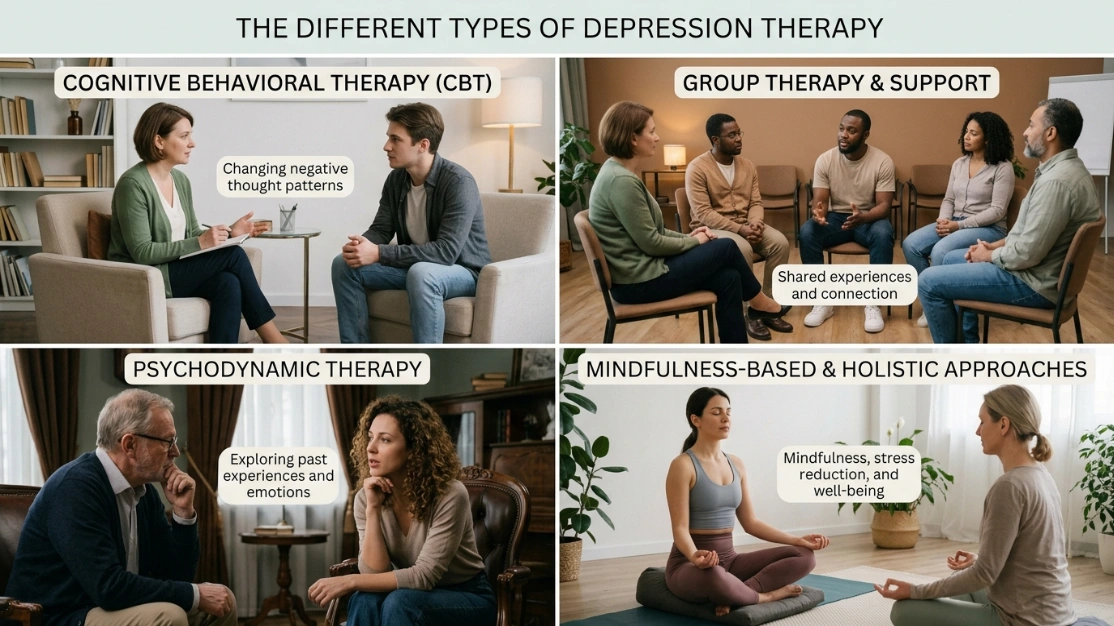
Different people respond distinctly to depression treatment and that is why there are numerous forms of therapy. All forms of therapy have their own methods that are applied to certain aspects of emotional wellbeing. The most widespread are the following:
Cognitive Behavioral Therapy (CBT)
CBT is a very prevalent type of treatment that is administered to depression. Identifying and changing negative thought patterns are considered to be the main focus. Depression is usually based on negative or sickly thinking i.e. thinking that you are worth nothing or that life will never be good again. CBT allows you to be aware of these thoughts and use other thoughts that are more realistic and positive. In this way, one is able to overcome the depression circle and start having their thoughts and emotions under their control again.
Interpersonal Therapy (IPT)
The concept of IPT is that the problem of depression is oftentimes rooted in the unresolved interpersonal problems. This therapy guides people to see the consequences of their depression on their relationships, as well as, learn to communicate better, solve conflicts, and establish stronger social bonds. IPT is aimed at the process of enhancing the relationships with family, friends, and colleagues, which consequently leads to the increase of emotional well-being.
Psychodynamic Therapy
Psychodynamic therapy goes a little further to analyze the influence of the past on the current behavior. It dwells on the thoughts of the unconscious and unresolved conflicts that might cause depression. Through the review of historical trauma and childhood experiences, as well as unresolved problems, one can have some understanding of the emotional patterns that influence their current mental condition. This form of therapy assists in unraveling thoughts which are unknown thus leading to emotional healing and development.
Mindfulness Based Cognitive Therapy (MBCT)
MBCT is a form of hybrid therapy, which integrates mindfulness meditation and the traditional cognitive therapy. It teaches people to remain during their lifetime and to be aware of their thoughts and feelings so that they realize the negative thought patterns before it leads to depression. Mindfulness practices enable people to learn to release unhelpful thoughts which will minimize chances of relapse in depression.
Medication Assisted Therapy
In other instances, a therapy and medication may be prescribed. Stabilizing mood and reducing symptoms can be done using medication that includes antidepressants, whereas therapy addresses the emotional and cognitive sides of the disorder. This two-dimensional strategy is particularly useful when dealing with the moderately to severely depressed.
How Common Is Depression?
Depression is a very common mental health condition. Many people experience it at some point in their lives.
Studies show that about 7% of adults in the United States experience depression each year. This means millions of people struggle with it annually.
Experts also estimate that more than 16% of U.S. adults about 1 in 6 people will experience depression during their lifetime.
However, the real number may be higher. Many people don’t seek medical help for their symptoms, so their depression often goes undiagnosed.
Depression can also affect younger people. Around 4.4% of children in the United States experience depression.
How Is Depression Therapy Treated?
One of the most treatable mental health problems is depression, in which approximately 80-90 percent of patients who have it, respond to the problem. The treatment of depression can be done using different treatment modalities.
Treatment Options for Depression
Psychotherapy
Psychotherapy, which is also referred to as talk therapy, is the process which entails a conversation with a mental health professional. The therapist makes you appreciate and transform the negative emotions, thoughts and behaviors. Cognitive Behavioral Therapy (CBT) is one of the most prevalent forms of therapy, and the attention of CBT is put on the alteration of the negative patterns of thinking. A few sessions of therapy are sufficient to some of them, and others would go through several months or even years.
Medication
Prescription drugs are antidepressants that might be taken to readjust the brain chemistry to combat depression. Antidepressants come in various forms and you might have to go through a few to end up with the one that is most effective on you. There are drugs with side effects that usually fade away with time. In case the side effects are not subsiding then your doctor might prescribe you another drug.
Complementary Medicine
Therapies applicable to work together with traditional medical therapies are complementary therapies. Therapies, such as acupuncture, massage, hypnosis, and biofeedback, may help people with mild cases of depression or those who have long-term occurrence of symptoms.
Brain Stimulation Therapy
For people with severe depression or depression accompanied by psychosis, brain stimulation therapy can be helpful. This includes treatments like:
- Electroconvulsive Therapy (ECT)
- Transcranial Magnetic Stimulation (TMS)
- Vagus Nerve Stimulation (VNS)
At Home Strategies to Improve Depression Symptoms
Along with formal treatment, you can make lifestyle changes that may improve your depression symptoms, such as:
- Regular exercise: Physical activity boosts mood and reduces stress.
- Quality sleep: Aim for a balanced sleep schedule, neither too little nor too much.
- Healthy diet: Eating a nutritious diet can help support overall well-being.
- Avoid alcohol: Alcohol is a depressant and can worsen symptoms.
- Social support: Spend time with loved ones to feel connected and supported.
How Depression Therapy Helps You Heal
The treatment of depression does not only provide relief of symptoms but it assists people to develop emotional instruments in their healing over the long term. The following are some of the ways therapy can result in emotional well-being:
Breaking the Cycle of Negative Thinking
It is one of the strongest tools of therapy as it is possible to oppose and rework negative thinking patterns. Depression tends to contribute to negative attitudes towards oneself and despair. Therapy assists such individuals to re-conceptualize such thoughts and have a healthier perspective of life.
Improving Emotional Awareness and Regulation
Most depressive individuals have a difficult time recognizing and managing their feelings. The therapy can help one learn to identify the triggers of emotions, the causes behind it and learn to respond to emotional stress in a more healthier manner.
Strengthening Relationships
Depression can be a cause of isolation and therapy is used to restore relationships through teaching communication skills and emotional awareness. The greater the social ties, the more helpful the support they will be and the better they might work concerning emotional well-being.
Building Healthy Coping Strategies
The therapy helps to learn effective coping skills to deal with stress, anxiety and other negative emotions. The skills can assist people in coping with the life problems in healthier manners and the chances of occurrence of depression are minimal.
The Long Term Benefits of Depression Therapy

It is not only therapy to get through the hard moments but it is therapy to establish a sustainable emotional stability. The advantages of depression treatment go far beyond symptom treatment, and long beyond the therapy. Among the long term advantages, there are:
- Increased emotional resilience: Therapy helps individuals build emotional strength, so they’re better equipped to handle life’s challenges.
- Improved self-esteem: As individuals learn to manage their thoughts and emotions, their self-worth often improves.
- Better relationships: By improving communication and emotional awareness, therapy fosters stronger, healthier relationships.
- A more positive outlook on life: Therapy helps individuals focus on the present and future, leading to a more optimistic perspective.
What to Expect in Therapy
If you’re new to therapy, it can feel intimidating, but it’s important to know what to expect. Here’s a step-by-step guide to help you navigate the process:
Finding the Right Therapist
Start by finding a licensed therapist who specializes in depression. You can ask for referrals from your doctor, friends, or family, or search online for therapists in your area. Make sure you feel comfortable with the therapist’s approach and personality.
The Initial Session
The first session is often about getting to know each other and understanding the reasons why you’re seeking therapy. The therapist will ask questions about your background, symptoms, and goals for therapy.
Setting Goals
Together with your therapist, you’ll set specific goals for your therapy. These goals might include reducing depression symptoms, improving relationships, or learning coping strategies.
Working Through the Process
During the subsequent sessions, you will be involved in attaining the goals set. The therapist will apply various methods (based on the form of therapy) to assist you to fight against negative thought patterns, emotional awareness and develop healthier habits.
Evaluating Progress
Throughout therapy, you’ll regularly evaluate your progress. This helps both you and your therapist see what’s working and adjust the approach if needed.
How Long Does It Take for Depression Therapy to Work?
Therapy time also differs with the patient and the severity of his or her depression. Others might respond positively to only a couple therapy of sessions whereas others can be taking months. Individuals experience a great improvement in an average of 12 to 20 sessions. One should be patient and have faith in the process, change will take a long time.
FAQs
What are the most common types of therapy for depression?
The most common types include CBT, IPT, psychodynamic therapy, and MBCT.
Can therapy be done online?
Yes, many therapists offer online sessions, making therapy more accessible.
How long does therapy take to work?
Most people see progress within a few months, but the timeline varies for each individual.
Final Thought
Therapy is an extremely potent instrument of combating depression. It assists one to detect the underlying factors that lead to their depression, establish a stronger emotional base and establish healthier coping mechanisms. In case you are experiencing depression, you want to take therapy as an indispensable aspect of your emotional healing process. Through proper support you can regain your life and be confident and hopeful in your life.